
True Dayton -Innovation. Creation. Inspiration. Home.
Breaking the Rules: Light, Steel, and Creation in Mike Elsass’s Studio
Sometimes, the best thing I can do with a camera is let go of how I’m supposed to use it.
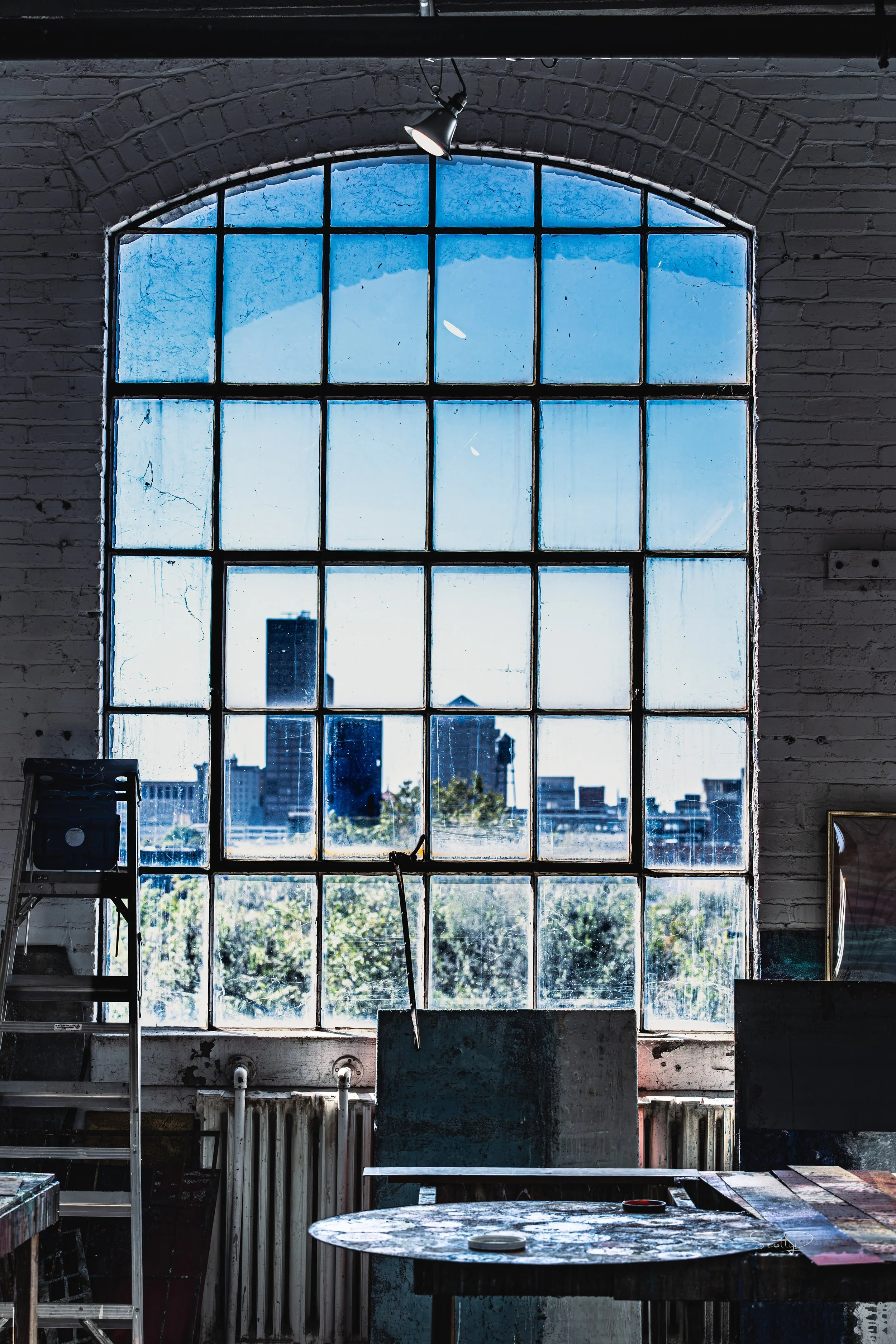
Home and Work - Dayton, Ohio serves as a window backdrop, from Mikes’s Front Street Studio. Photo: ScottyD - Scott Davis, Dayton, Ohio based Photographer
Walk into a space. Pay attention. See where the light falls. Find an angle that makes me stop for a second.
Inside Dayton artist Mike Elsass’s studio at Front Street Art Studios & Galleries, that approach gave me plenty to work with. Abstract paintings on weathered steel. Color-covered tables. Worn tools. Tall industrial windows bringing the city into the room.
For this series, I made candid photographs with my Sony 70–200mm f/2.8 OSS G Master, treating the zoom with a prime lens mindset. I brought a street photography approach indoors—following light, exploring angles, and letting the environment help tell the story.
As a photographer and artist, I’m drawn to those relationships. A photograph starts with what is in front of me, but it takes shape through how I choose to see it.
Mike Elsass: Abstract Art on Weathered Steel
Mike Elsass is rooted here in Dayton, Ohio, with work that has traveled far beyond it. Dayton Metro Library describes him as a nationally recognized artist with work in more than 2,000 private collections. His own biography describes an audience across the United States and overseas. Dayton Metro Library, Mike Elsass’s biography
He creates contemporary abstract paintings on weathered and rusted steel. Mostly self-taught, with Roger Sayre as a mentor, Mike builds color field inspired work through painting, sponging, sanding, and glazing. Some pieces develop through as many as 40 layers. He describes his art as spiritual and meditative. Dayton Metro Library
That choice of surface interests me. The steel already has a history before the painting begins.
Mike adds to that history. Color settles into texture. Rough areas catch the light. Layers reveal themselves differently as you change your angle.
In an April 2026 interview with Dayton Magazine, he described using recycled steel and materials including sand, walnut shells, and tar. The article also reported a 28-piece installation for Tower 45 in Midtown Manhattan—a reminder of how far work created by a local artist can reach. Dayton Magazine
Looking around his studio, I found myself responding to both the artwork and the evidence of making it.
The supplies. The surfaces. The work waiting on tables.
All of it gave me somewhere to begin.
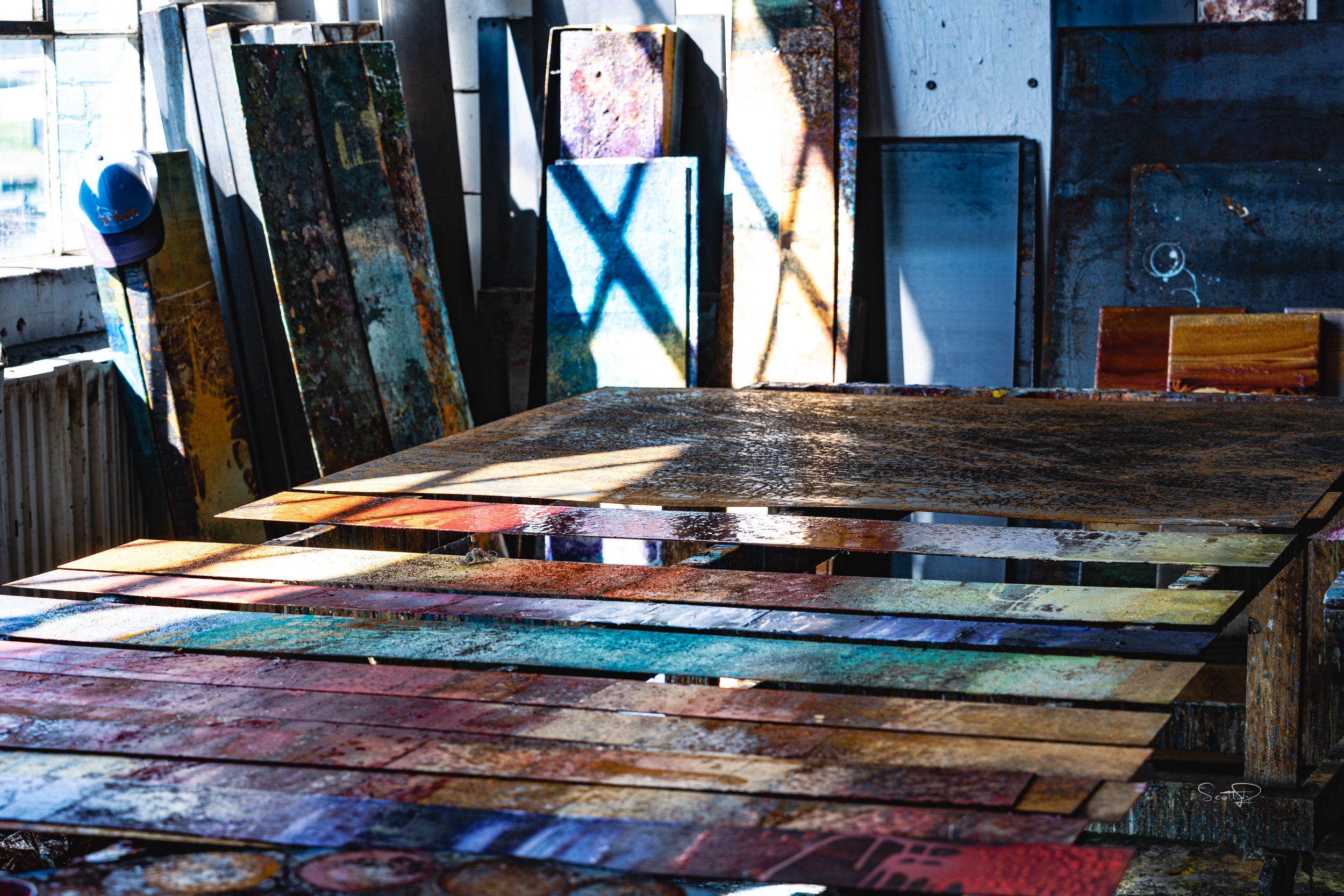
Window light casts diagonal shadows across colorful abstract steel paintings arranged on worktables in Mike Elsass’s Dayton, Ohio studio. - Photo: ScottyD - Scott Davis
Using a 70–200mm Zoom With a Prime Lens Mindset
A zoom lens gives me options. For this shoot, I wanted to bring more intention to how I used those options.
Treating the 70–200mm like a prime meant working my position and considering the angle before reaching for the zoom ring. It encouraged me to slow down and look at how the pieces of the frame related to each other.
The rule I was breaking was mostly my own habit.
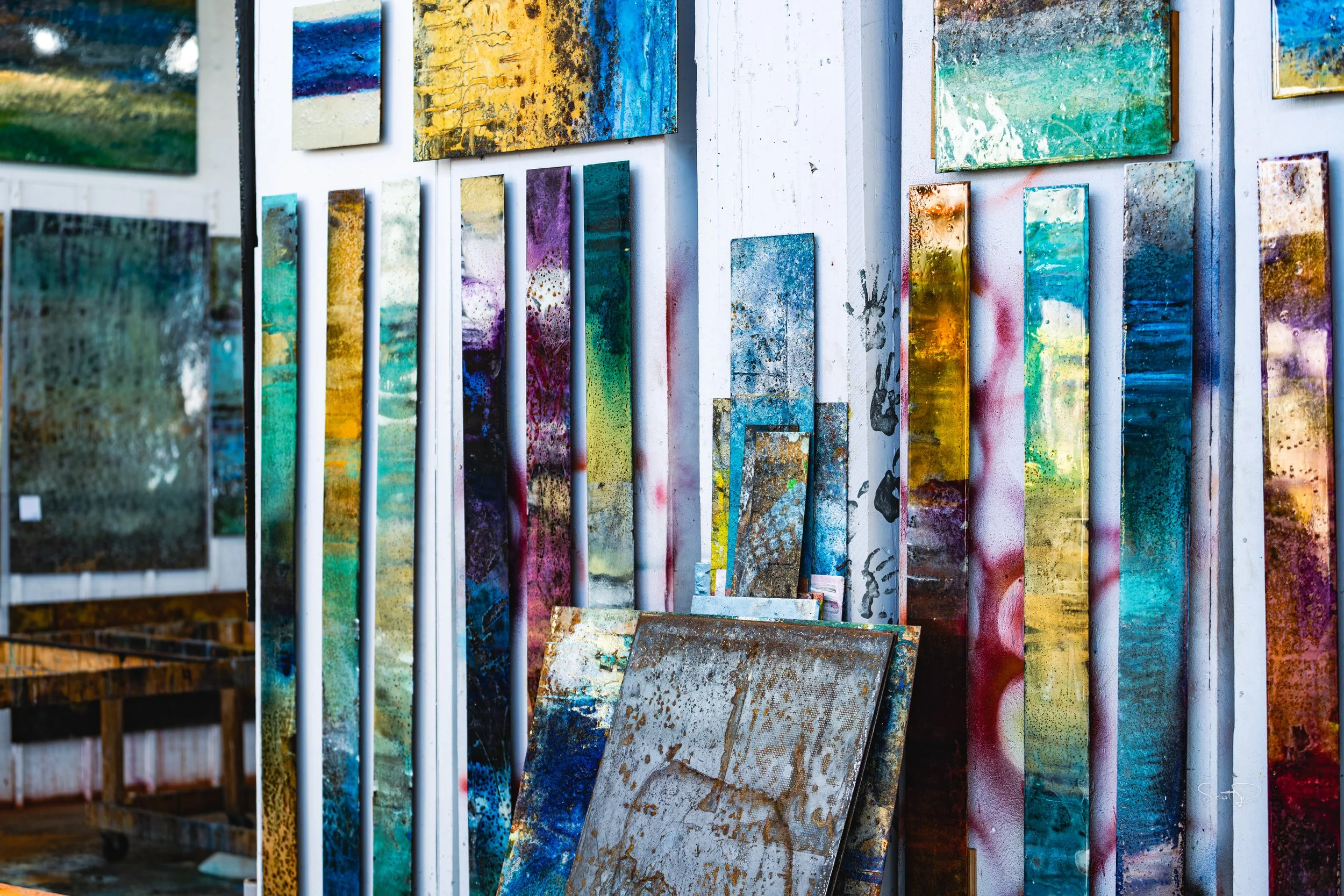
I didn’t need every photograph to explain the entire studio. Sometimes, a few worn pastels resting in scattered pigment were enough. Sometimes, it was a stack of textured steel panels. Sometimes, it was Mike working beyond a foreground full of paint containers.
In that candid photograph, Mike is turned toward his work. The supplies and tables surround him, giving the viewer a sense of his working environment.
The studio becomes part of his portrait.
That is something I enjoy about environmental photography: the details around a person can help us understand what they create.
Bringing a Street Photography Eye Indoors
Street photography has taught me to pay attention to everyday things.
A shadow. Repeating lines. A gesture. Objects that come together for a moment and make a composition worth exploring.
I brought that way of seeing into Mike’s studio.
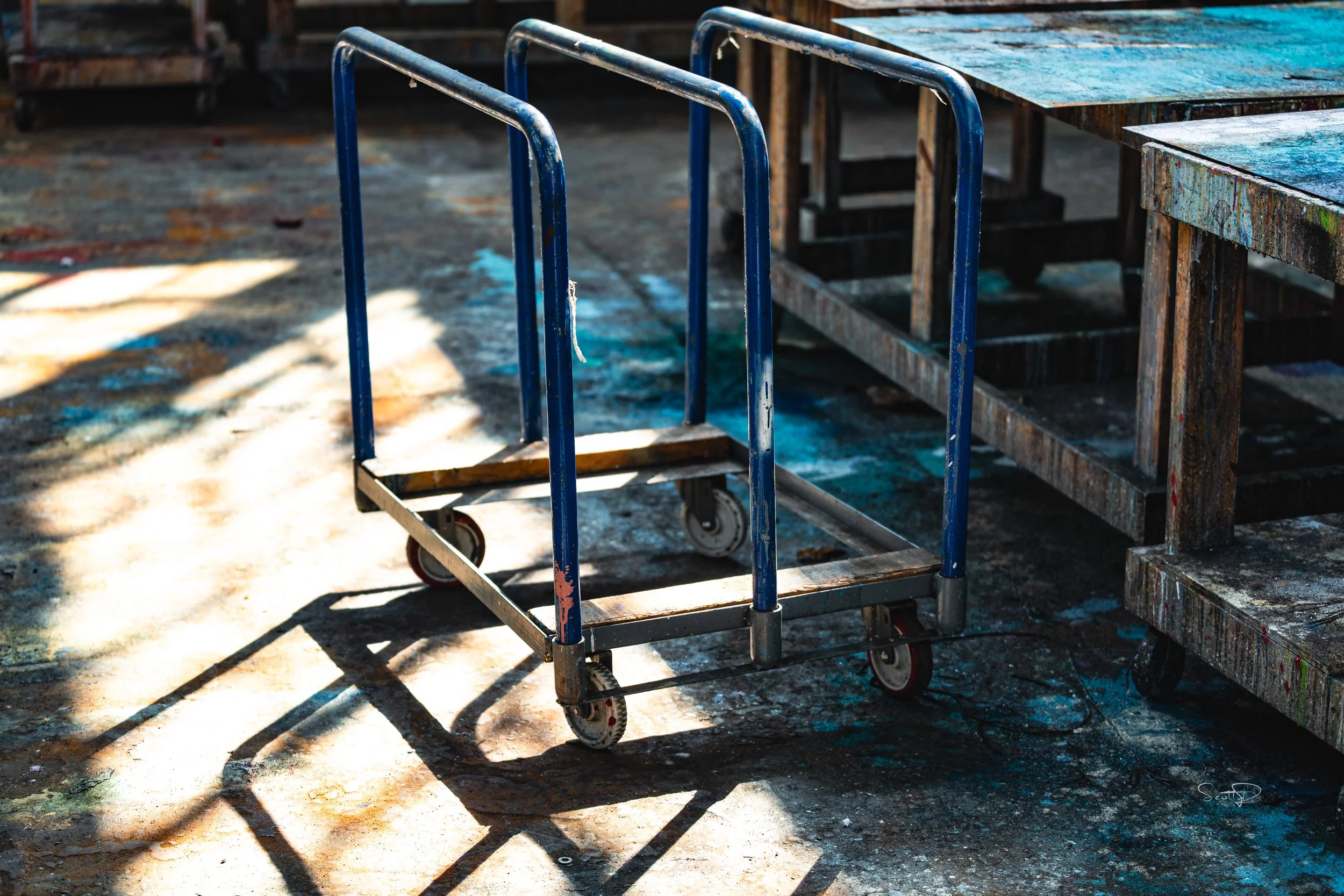
A blue utility cart became a study in shape and shadow. Long painted panels created bands of color across the worktables. A stack of smaller pieces revealed a rough, almost landscape-like surface.
The windows gave the story another layer.
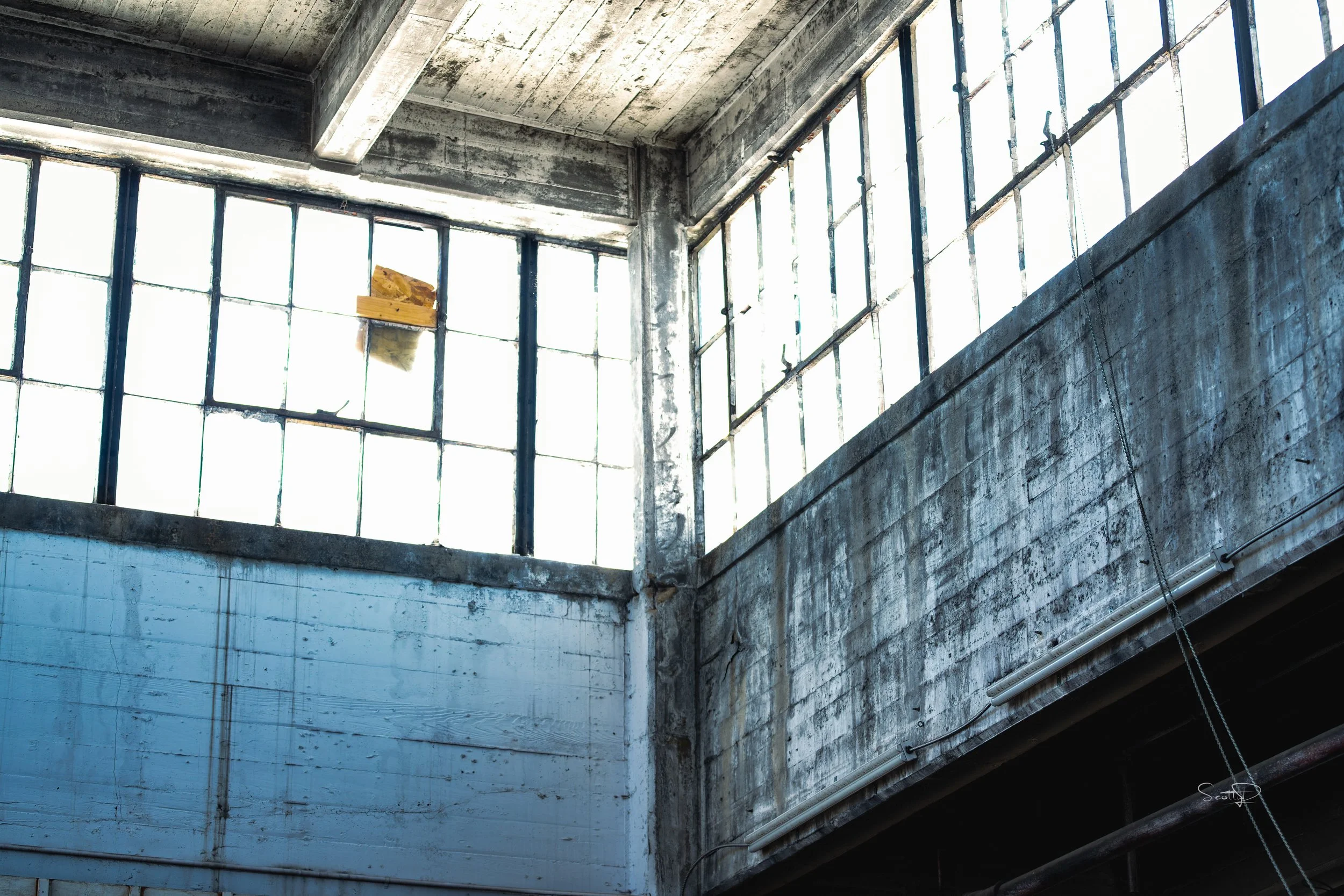
Looking upward, I found bright panes, heavy beams, and weathered walls. Through the arched window, the Dayton skyline became part of the photograph. Those frames connect the work inside the studio to the city around it.
Natural light moved across everything. It brought out the texture of the steel and created its own temporary compositions—bright strips across tables, dark diagonals over artwork, and geometric shadows on the floor.
I kept following it.
How Dayton Artists Support and Inspire Each Other
One of the things I value about being part of Dayton’s arts community is the opportunity to see how other people create.
At Front Street, different mediums and ways of thinking exist close together. As a photographer, I can step into a painter’s workspace and come away with a new idea about color, texture, or composition.
Mike’s work gives me something to respond to. My photographs offer another way for someone to encounter his art.
That exchange matters.
Local artists support each other by showing up. Visiting a studio. Sharing someone’s work. Bringing a friend to an exhibition. Buying a piece when we can. Asking about a process and taking the time to listen.
We also support each other by being curious.
Painters, photographers, sculptors, designers, and makers bring different experiences to the same community. Seeing how someone else solves a creative problem can open a door in our own work.
For me, photographing another artist’s studio is part of that conversation. I get to explore my own visual style while drawing attention to the care and effort behind someone else’s creations.
One artist’s work can become the starting point for another artist’s next idea.
Making Room for Discovery
Mike’s website uses the phrase “Brush Before Brain,” connecting his work and workshops with experimentation and joy. Mike Elsass
I connect with that willingness to begin.
We spend time learning our tools and developing our skills. Then we have to give ourselves room to use them in ways that surprise us.
For this visit, that meant approaching a familiar lens differently and allowing ordinary studio details to carry the story.
These photographs are my response to the space: the light I noticed, the angles I chose, and the relationships I found between the artist, his work, and his surroundings.
That is where photography becomes personal for me.
I want to make images that invite someone to pause, look closer, and discover something they might have walked past.
Inside Mike Elsass’s studio, I found another artist’s creations giving me a reason to push my own.
Mike creates layers on steel. I found layers through the viewfinder.
What could another artist’s workspace help you see differently?
